Putin and Modi pledge to expand India-Russia trade ties and strengthen bilateral relations.
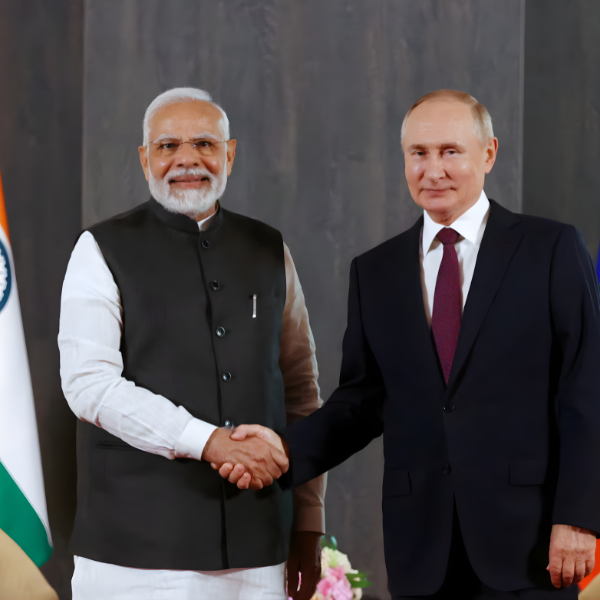
NEW DELHI – Russian President Vladimir Putin on Friday offered India a steady and uninterrupted supply of fuel, drawing a measured response from New Delhi. During the meeting, Putin and Indian Prime Minister Narendra Modi agreed to deepen cooperation in trade and defence, reinforcing a partnership that spans decades.
India—Russia’s largest buyer of both seaborne oil and military equipment—welcomed Putin for a two-day state visit, his first trip to New Delhi since the 2022 invasion of Ukraine.
However, India is also engaged in discussions with the United States on a potential trade agreement aimed at reducing the tariffs imposed during Donald Trump’s presidency over India’s Russian oil purchases. Meanwhile, India’s energy imports are projected to decline to a three-year low this month due to recent U.S. sanctions and tariff pressures. Russia has said it wants to import more Indian goods to grow trade to $100 billion by 2030.
India cautious on oil imports
Putin said Moscow was ready to continue ensuring “uninterrupted fuel supplies” to India, following up on comments on Thursday questioning U.S. pressure on India to curb oil purchases from Russia.India appeared cautious about the offer.
Asked about the future of energy trade between the two countries, India’s foreign secretary said Indian energy companies take decisions based on “evolving market dynamics” and “commercial issues that they confront while sourcing their supplies”, indicating the pressures of sanctions and prices. Energy cooperation between the two countries continues within this framework, Vikram Misri told a media briefing.
Underlining this caution, Indian refineries Indian Oil Corp and Bharat Petroleum Corp have placed January orders to load Russian oil from non-sanctioned suppliers due to widening discounts, Reuters reported on Friday.
Ties have ‘stood test of time,’ Modi says
Describing India’s enduring partnership with Russia as “a guiding star,” Modi said: “Based on mutual respect and deep trust, these relations have always stood the test of time.” “We have agreed on an economic cooperation program for the period up to 2030. This will make our trade and investment more diversified, balanced, and sustainable,” he told reporters, with Putin by his side.
Modi, who warmly embraced Putin on the airport tarmac when he arrived on Thursday, also reiterated India’s support for a peaceful resolution to the war in Ukraine.
A joint statement issued following the summit said: “The leaders emphasized that in the current complex, tense, and uncertain geopolitical situation, Russian-Indian ties remain resilient to external pressure.”
21-gun salute for Putin
Putin received a ceremonial welcome on Friday on the forecourt of Rashtrapati Bhavan, the colonial-era presidential palace, with a 21-gun salute as his convoy drove in.
A large business and government delegation has accompanied Putin. Among the deals signed, the two countries agreed to help Indians move to Russia for work, to set up a joint venture fertilizer plant in Russia, and boost cooperation in agriculture, healthcare and shipping.
They also agreed to reshape their defence ties to take account of New Delhi’s push for self-reliance through joint research and development, as well as the production of advanced defence platforms. This would include joint production in India of spare parts, components, assemblies, and other products for servicing Russian weapons and military equipment.
Putin questions Washington
In an interview with broadcaster India Today aired on Thursday, Putin challenged U.S. pressure on India not to buy Russian fuel.
“If the U.S. has the right to buy our (nuclear) fuel, why shouldn’t India have the same privilege?” he said, adding that he was ready to discuss the matter with Trump.
India has said Trump’s tariffs are unjustified and unreasonable, noting continued U.S. trade with Moscow. The U.S. and European Union still import billions of dollars’ worth of Russian energy and commodities, ranging from liquefied natural gas to enriched uranium, despite economic sanctions.